A photographer reflects on portraits made for no occasion at all, and why the ordinary moments of childhood may be the ones worth preserving most.
Read more→Timeless portraits. Lasting legacies.
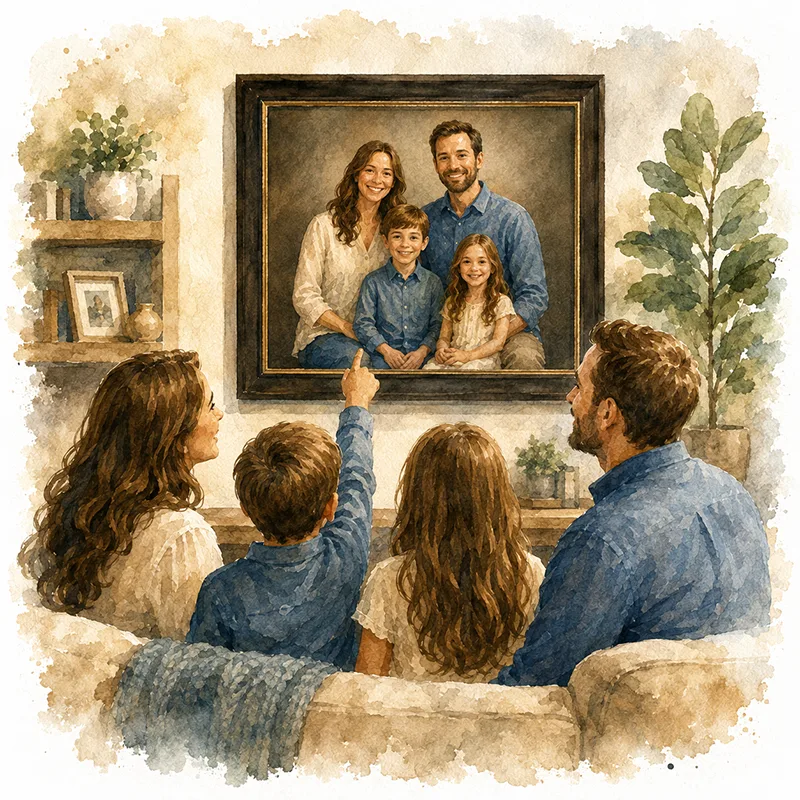
If you've spent much time looking at photography websites, you've probably seen some version of this claim: displaying family portraits in your home can increase your child's self-esteem.
As a portrait photographer, I love hearing that. I create family portraits. I believe strongly in displaying them in your home. If science wants to come along and back me up, who am I to argue?
There's just one problem. I went looking for the actual science, and I'm not sure it says that at all.
Most versions of this claim eventually trace back to a study from 1975, by researchers Mary Ammerman and Jerry Fryrear. It's a real study, published in a real journal, and the researchers really did find an improvement in one measure of self-esteem. So far, so good.
Here's where it gets interesting, though. They weren't studying kids who had family portraits hanging on the wall at all. They took a group of fourth graders who'd been identified as having low self-esteem, handed them Polaroid cameras, and had them spend five weeks photographing themselves and building scrapbooks.
And it worked - sort of. The kids showed real improvement in how they acted, more confidence in their behavior. But their own internal sense of how they felt about themselves barely moved.
That's genuinely interesting research. It's just a pretty big leap from there to "hang a family portrait over the fireplace and your child's self-esteem will improve." Somewhere along the way, though, that's basically what happened to the story.
This is where the internet does what the internet does.
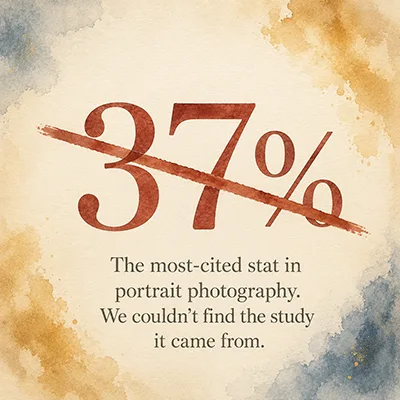
Search around long enough and you'll find photography websites confidently telling you that displaying family photographs increases a child's self-esteem by 37 percent. Thirty-seven percent - impressively specific, right down to the decimal point that isn't even there.
I went looking for the study behind that number. I couldn't find one. There's also a frequently cited stat involving a University of Manchester psychologist named Geoff Beattie, which turns out to actually be a survey of about 1,000 parents on their attitudes toward family photos - not an experiment measuring any actual change in a child's self-esteem.
None of this means family photographs aren't important. It just means we probably shouldn't put the lab coats on quite yet.
Here's where the story takes a turn I didn't expect.
Once you stop trying to prove that a portrait on the wall magically moves a number on a self-esteem test, there's actually some really compelling modern research pointing somewhere else entirely: family stories.
Psychologist Robyn Fivush at Emory University has spent decades studying family storytelling and how kids come to understand who they are. What she's found is pretty striking - teenagers who know more stories about their families, about parents, grandparents, things that happened long before they were born, tend to have a stronger sense of identity, higher self-esteem, and a greater feeling that their life means something. Other researchers in this space have found the same pattern: families who reminisce together in detail tend to raise kids with a stronger sense of self.
And that got my attention, because what usually kicks off that kind of storytelling? Very often, it's a photograph.
Think about the old photos in your own family. You pull out an album, and somebody inevitably says, "Oh, I remember that." And then the stories start.
That's your grandfather when he was young. That's the house your mother grew up in. That's the ridiculous car your dad thought was cool. That's you on your first day of school.
The photograph isn't the story. It's the doorway into the story.
And suddenly the value of a family photograph starts making a lot more sense. A kid sees that he belongs to something that existed before him - grandparents, parents, siblings, whole chapters he wasn't even around for. He hears where everyone came from, what they went through. Over time, all those little stories start answering a pretty big question: where do I fit into all of this?
The research on family storytelling suggests that answer genuinely matters.
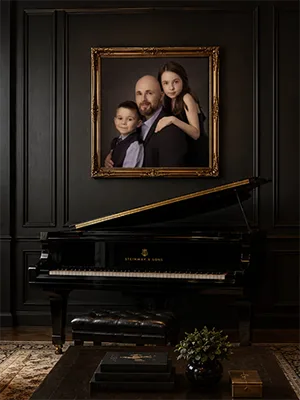
Here's a piece research can't fully settle for us, but I believe it anyway: a family portrait hanging in your home isn't hidden on a phone. You walk past it every day.
There's something powerful in that. A kid doesn't have to open an app or scroll past eight thousand other photos to find it. It's just there, part of the house, and there they are - right in the middle of the family.
Does walking past that portrait every morning before school scientifically raise a child's self-esteem by exactly 37 percent? I wouldn't make that claim to save my life. But does it quietly reinforce something like "this is my family, this is where I belong"? I think that's a much more reasonable thing to believe - and unlike the 37-percent number, it actually lines up with what the real research says about identity, storytelling, and belonging.
One more piece worth mentioning: psychologists have spent years studying nostalgia, and it turns out nostalgia isn't just sitting around talking about the good old days. Researchers have connected nostalgic reflection with feeling more socially connected, finding more meaning, and general psychological well-being. And not much triggers a memory quite like a photograph.
A family portrait doesn't just document what everyone looked like. Years later, it can bring back an entire stretch of your life - the house, the kids at that age, the dog who wouldn't sit still, the haircut you deeply regret. All of it comes rushing back at once. That's one reason I think photographs tend to become more valuable with time, not less.
Do I think displaying family portraits is good for kids? Absolutely.
Do I think science has proven that hanging one on the wall raises a child's self-esteem by 37 percent? No - that research just doesn't exist.
But what the real research does tell us might actually matter more. Kids benefit from knowing their family's stories. Rituals and shared experiences matter. Reminiscing together matters. A sense of identity and belonging matters. And a photograph gives you a remarkably simple way to keep all of that alive.
Maybe the real value of a family portrait was never about moving a number on a test. Maybe it's simpler than that - that day after day, it quietly reminds a kid: these are my people, this is my family, this is where I belong.
I think that's worth putting on the wall.

Written by
Larry Lourcey is a Master Photographer with more than 30 years of experience creating timeless portraits of children, families, and seniors in Plano, Texas. Through the Learn series, he shares practical advice and observations to help families preserve what matters most.
Keep Reading
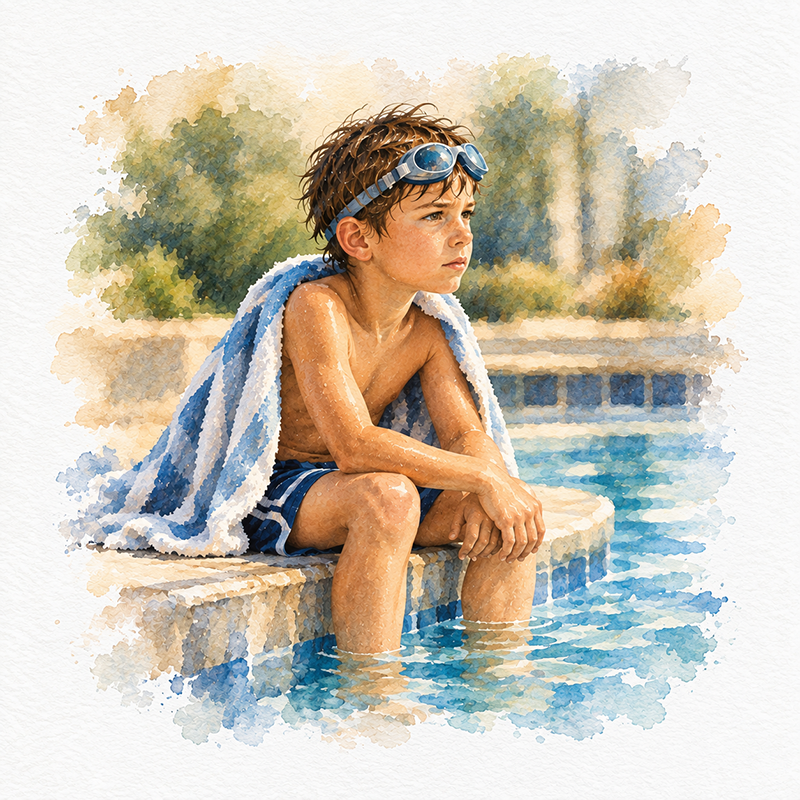
The Ordinary Moments Are the Ones We Forget
A photographer reflects on portraits made for no occasion at all, and why the ordinary moments of childhood may be the ones worth preserving most.
Read more→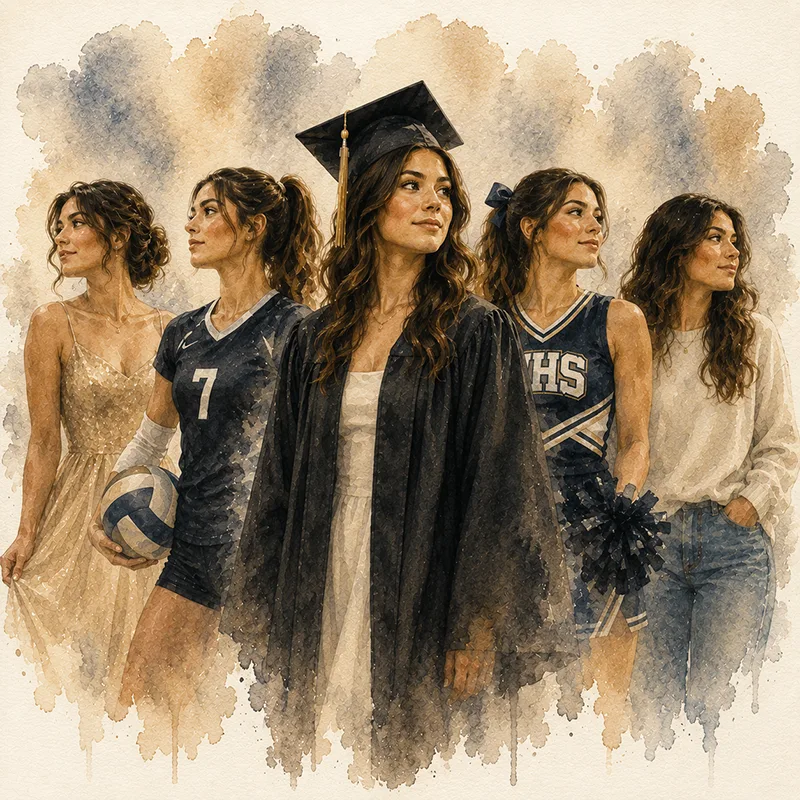
The Secret to Unique Senior Portraits
Forget the Pinterest senior picture ideas. Larry Lourcey on why the most unique thing in any senior portrait is the senior themselves.
Read more→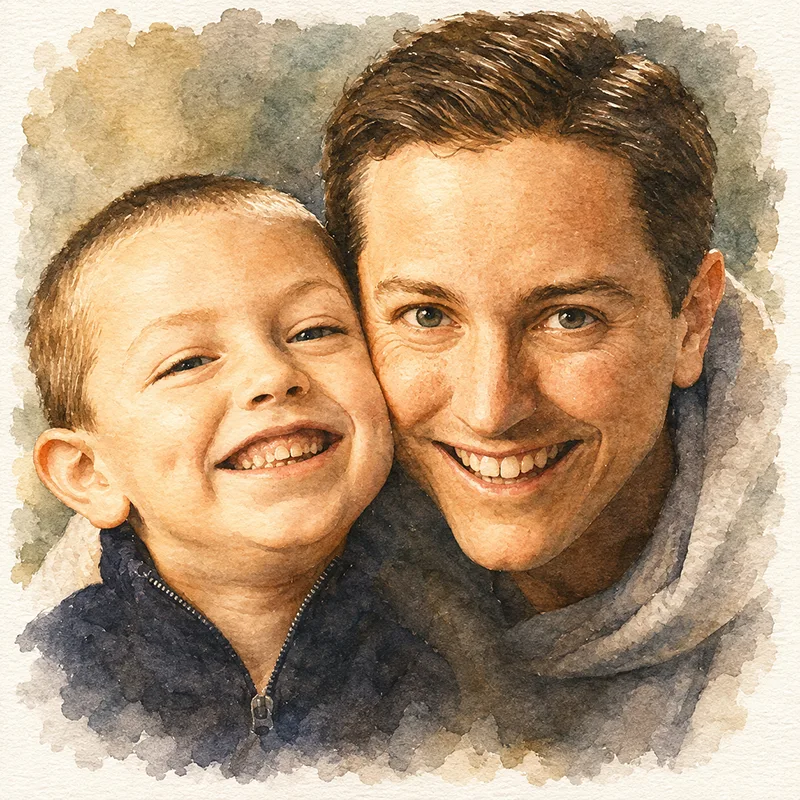
Why the Worst Timing Sometimes Makes the Best Pictures
A shaved head. A black eye and boxing gloves. Larry Lourcey on why the worst-timed photos sometimes turn out to be the best ones.
Read more→Begin Your Portrait
A timeless portrait goes beyond how someone looks. It tells a story worth keeping.
Discover the Portrait ExperienceTimeless portraits. Lasting legacies.
© 2026 Lourcey Photography. All work made with care.
PPA Master Photographer