A photographer reflects on portraits made for no occasion at all, and why the ordinary moments of childhood may be the ones worth preserving most.
Read more→Timeless portraits. Lasting legacies.
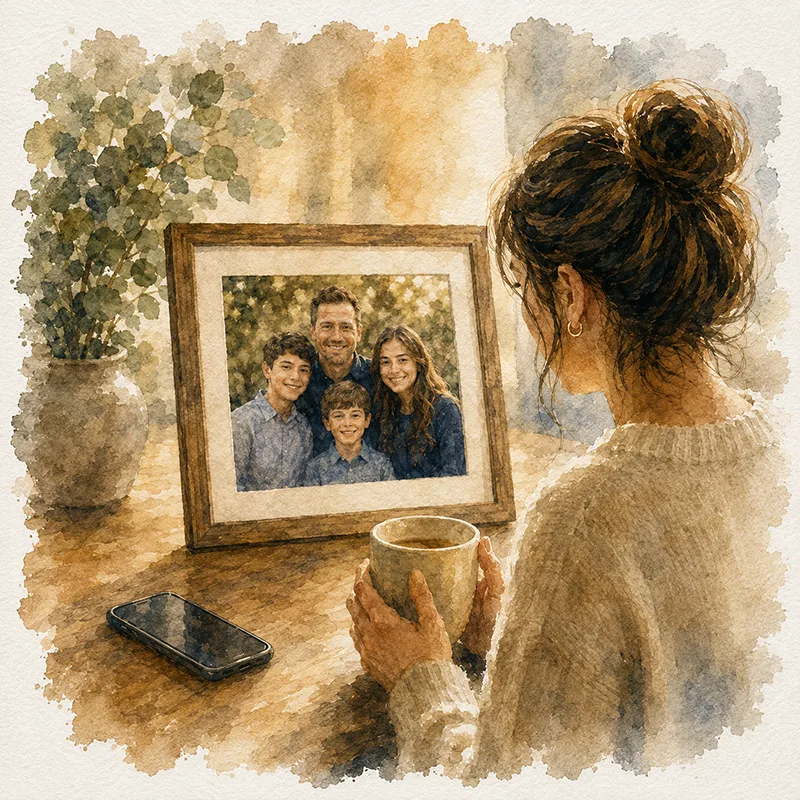
There's a strange thing that happens when you look through a lot of family photographs. Mom disappears.
She was obviously there. She planned the vacation. She packed the bags. She made sure everyone had sunscreen. She probably knew where the bathroom was, where the dinner reservation was, and exactly what time everyone needed to leave the hotel the next morning.
But judging by the photographs, Dad apparently took the kids to Europe by himself.
Why? Because Mom was holding the camera.
And it turns out this isn't just something photographers have noticed. Researchers have noticed it too.
In 2026, Shutterfly surveyed 1,001 American parents about who actually appears in their family photographs. The results were pretty striking. Mothers were significantly less likely than fathers to have photographs with their children, and more than half said they were usually the person taking the pictures.
Another 2026 survey by Mixbook found something similar: a notable share of mothers said they were rarely in their family's photographs.
But here's the interesting part - this isn't really a new problem. We've just finally started putting numbers to it.
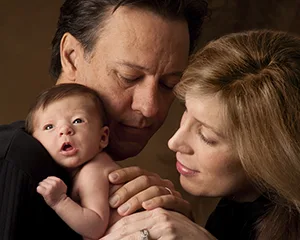
For generations, Mom has often been the unofficial family historian. She's the one who remembers to take the picture at the birthday party, the first day of school, Christmas morning, the beach, the soccer game, the grandparents visiting. And long before anyone had an iPhone, she was probably the one putting those photographs into albums.
There's actually academic research on this. Researchers studying family photography have found that women have historically played an outsized role in creating and managing the family's photographic record. The pattern goes back at least to the early 1900s, when Kodak specifically marketed photography to mothers as part of their responsibility for preserving childhood and family memories.
Think about the irony of that for a second. Mom became responsible for making sure everybody's life was documented - and consequently became the person least likely to be in the documentation. That's a pretty lousy deal.
A few years ago, researchers Su Holmes and Bethany Atkins looked specifically at mothers and family photography. Their academic paper discusses something that had already become known as the "ghost," "missing," or "invisible" mom phenomenon - the tendency for mothers to disappear from their own family's photographic history because they're so often the person creating it.
Their study was actually about something very modern: selfies. Several of the mothers they interviewed talked about taking selfies partly because it was one of the only ways to make sure they appeared in photographs with their children.
That's kind of sad when you think about it. We now carry extraordinarily sophisticated cameras everywhere we go. Families probably have more photographs than at any point in human history. And Mom still has to turn the camera around and photograph herself if she wants proof that she was there.
Of course, being behind the camera isn't the whole story. I've photographed families for more than 30 years, and I've heard some version of this sentence more times than I could possibly count: "I really don't like having my picture taken." And it's usually Mom saying it.
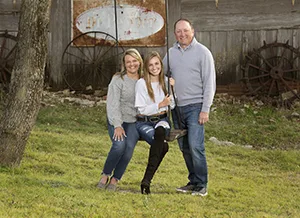
Sometimes she wants to lose ten pounds first. Sometimes she doesn't like her hair. Sometimes she just wants pictures of the kids because they're the ones who are changing. I understand all of that. But there's a problem.
Ten years from now, your children aren't going to look at that photograph and think, Mom really should have lost those ten pounds. They're going to think, that's Mom. And twenty or thirty years from now, that photograph may mean more to them than you could possibly imagine today.
I've always found this fascinating about photographs: their value changes. A picture you barely notice today can become incredibly important later, simply because enough time has passed.
Right now, you may look at a photograph and notice your wrinkles, your weight, or the fact that your hair wasn't cooperating. Your children see something completely different. They see the way you looked when they were eight. They see the house they grew up in, the clothes everyone wore, the dog they still talk about, the people who aren't around anymore.
Eventually, photographs stop being about whether everyone looked perfect. They become evidence of a life you shared. And that's why being absent from them matters.
I'm obviously a big believer in professional family portraits - I've made a career out of them. But this isn't just about professional portraits.
Hand Dad the phone. Ask the stranger at Disney World to take the picture. Use the timer. Take the selfie. And yes, every once in a while, have someone create a beautiful portrait where you're actually in it.
The important thing is that you exist in your family's photographic history. Because if you're always the person behind the camera, something strange happens over the years. You do a wonderful job documenting everyone else's childhood, everyone else's birthdays, everyone else's vacations, everyone else's life. And gradually, without intending to, you edit yourself out of the story.
So Mom, get in the picture. Someday, your children will be very glad you did.
Got your confidence up now?
Let's get something scheduled!

Written by
Larry Lourcey is a Master Photographer with more than 30 years of experience creating timeless portraits of children, families, and seniors in Plano, Texas. Through the Learn series, he shares practical advice and observations to help families preserve what matters most.
Keep Reading
The Ordinary Moments Are the Ones We Forget
A photographer reflects on portraits made for no occasion at all, and why the ordinary moments of childhood may be the ones worth preserving most.
Read more→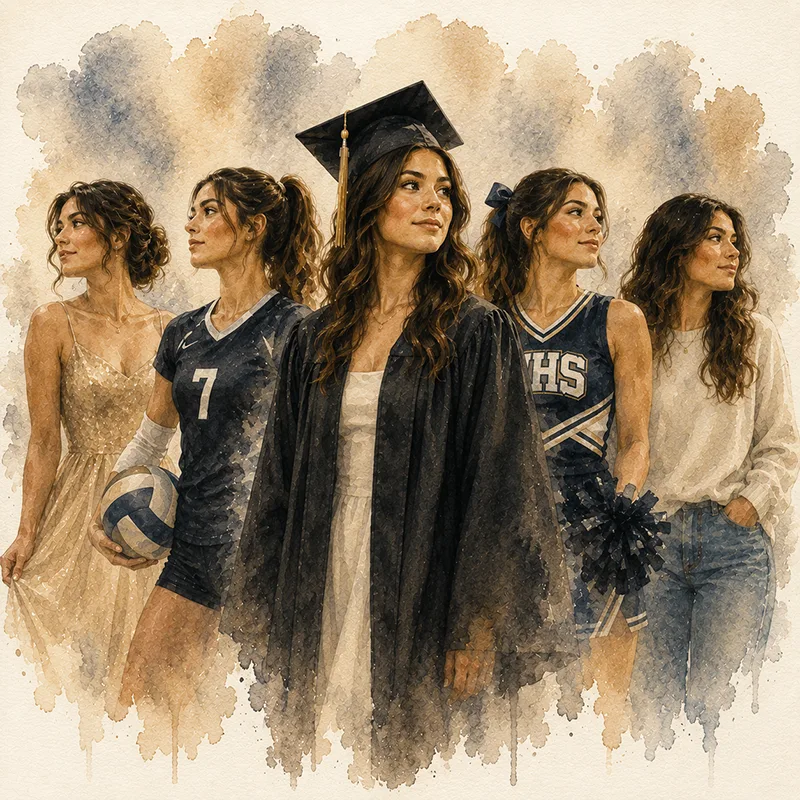
The Secret to Unique Senior Portraits
Forget the Pinterest senior picture ideas. Larry Lourcey on why the most unique thing in any senior portrait is the senior themselves.
Read more→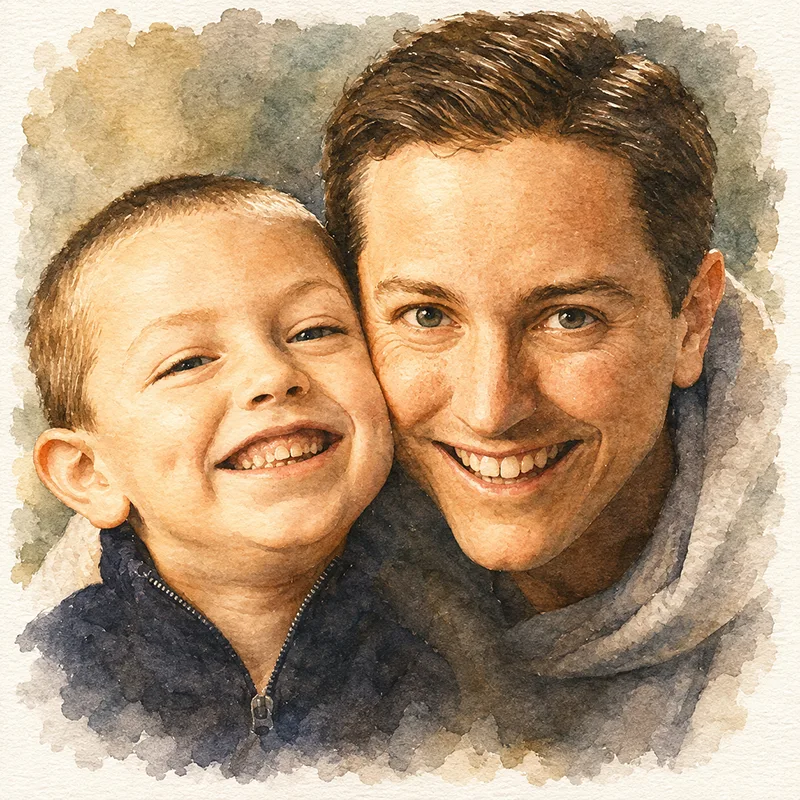
Why the Worst Timing Sometimes Makes the Best Pictures
A shaved head. A black eye and boxing gloves. Larry Lourcey on why the worst-timed photos sometimes turn out to be the best ones.
Read more→Begin Your Portrait
A timeless portrait goes beyond how someone looks. It tells a story worth keeping.
Discover the Portrait ExperienceTimeless portraits. Lasting legacies.
© 2026 Lourcey Photography. All work made with care.
PPA Master Photographer