Forget the Pinterest senior picture ideas. Larry Lourcey on why the most unique thing in any senior portrait is the senior themselves.
Read more→Timeless portraits. Lasting legacies.
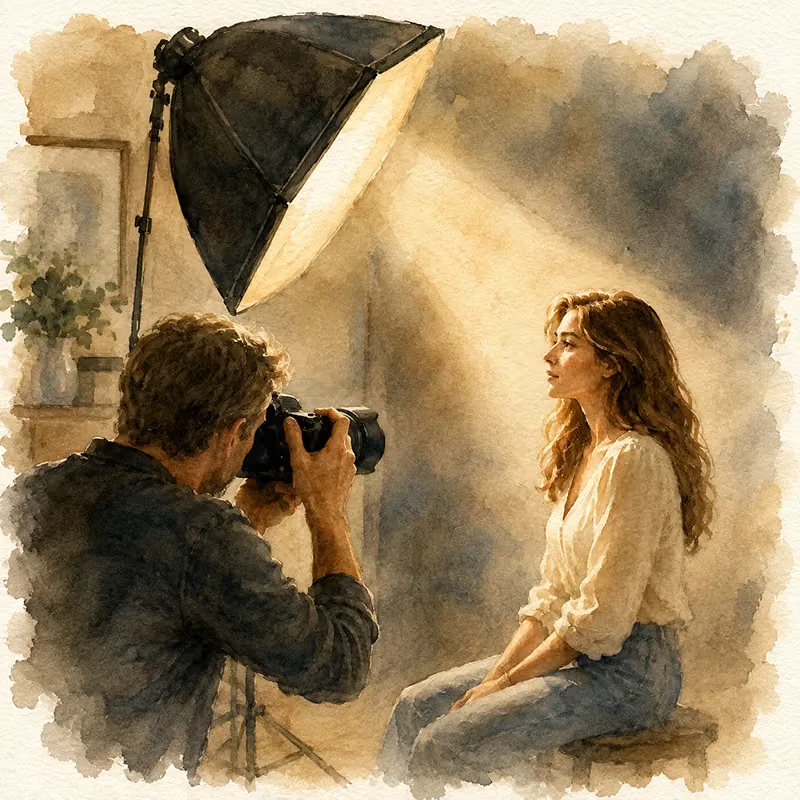
If you've ever shopped for a camera, you've probably seen advertisements promising sharper images, faster autofocus, and incredible image quality. It's easy to assume that buying a better camera is the secret to creating better photographs.
It isn't.
The word photography literally means "writing with light." The camera is simply the tool that records it. That's why an experienced photographer who understands light can often create a more compelling portrait with an iPhone than someone using a $4,000 mirrorless camera who doesn't understand lighting.
Light is what gives a portrait its dimension. It shapes a face, adds depth, creates mood, and directs your eye to what matters most. You can photograph the same person in the same pose, in the same location, and end up with two completely different portraits simply by changing the lighting. One may look perfectly acceptable. The other can feel dramatic, elegant, and almost three-dimensional.

Several years ago, I created a portrait of a high school senior that illustrates this perfectly. The lighting was intentionally unconventional - most of his face disappeared into shadow, with only a thin rim of light outlining his profile. You could still recognize him instantly, but the portrait had a sense of mystery and impact that wouldn't have existed with flat lighting. That image went on to receive PPA's Imaging Excellence designation, but the honor wasn't about the camera or even the pose. It was about what the light accomplished.
Having judged countless professional photography competitions over the past decade, I've noticed one of the biggest reasons images fail to earn higher scores is poor lighting. Lighting is what gives an image its energy. A plain subject photographed with exquisite lighting will outperform a beautiful model photographed with poor lighting every day of the week.
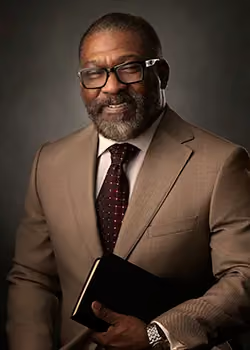
The camera is just a tool. Buying the latest model won't automatically make someone a better photographer, much the same way buying a $400 titanium skillet won't turn you into Gordon Ramsay.
The next time you look at a portrait you love, don't ask yourself, "I wonder what camera they used?" Instead, look at the light. There's a good chance that's what made the portrait unforgettable.

Written by
Larry Lourcey is a Master Photographer with more than 30 years of experience creating timeless portraits of children, families, and seniors in Plano, Texas. Through the Learn series, he shares practical advice and observations to help families preserve what matters most.
Keep Reading
The Secret to Unique Senior Portraits
Forget the Pinterest senior picture ideas. Larry Lourcey on why the most unique thing in any senior portrait is the senior themselves.
Read more→
Why You Never Look the Way You Expect in Photos
Why does your own voice or photo never look "right" to you? Larry Lourcey on the science behind why everyone else has always seen the real you.
Read more→
How Much Do Professional Headshots Cost?
How much do professional headshots really cost? A real look at DFW pricing, what affects it, and why a phone photo isn't quite the same thing.
Read more→Begin Your Portrait
A timeless portrait goes beyond how someone looks. It tells a story worth keeping.
Discover the Portrait ExperienceTimeless portraits. Lasting legacies.
© 2026 Lourcey Photography. All work made with care.
PPA Master Photographer