Forget the Pinterest senior picture ideas. Larry Lourcey on why the most unique thing in any senior portrait is the senior themselves.
Read more→Timeless portraits. Lasting legacies.
One of the bad parts about the internet is that we now have waaaaay too much information available at our fingertips. You start with a simple questions and find yourself heading down a rabbit hole. The journey somehow ends with you reading actual psychology research at midnight.
It started because I heard a recording of my own voice and hated it, the way pretty much everyone does. I got curious about why, and one search led to another, and before long I wasn't reading about voices anymore - I was reading about faces, mirrors, and why none of us actually know what we look like either. Turns out it's all connected, and it explains something I hear constantly in my studio.
Have you ever heard a recording of your own voice and thought, "that doesn't sound like me at all"?
Almost everyone has. And almost everyone reacts the exact same way - a little wince, a little denial, an urge to say "turn that off." It's such a universal experience that psychologists actually have a name for it: voice confrontation. Researchers have been studying it since the 1960s, which tells you it's not just you being dramatic about a voicemail greeting.
Here's the strange part, though. That recording isn't lying to you. It's the version of your voice everyone else has heard your entire life.
When you talk, you hear yourself two ways at once. Some of the sound travels through the air into your ears, the same way it reaches everyone else. But a lot of it also travels straight through the bones of your skull, and bone conducts those deep, low frequencies especially well. That gives the voice in your head a fullness and richness that nobody else is getting.
A recording only captures the air part. So what you hear played back isn't distorted or thinner than reality - it's actually the accurate version, the one your friends and family have always heard. The "real" voice you thought you had, the one in your head, was always a little bit of an illusion, enhanced by your own skeleton.
That's a genuinely strange thing to sit with. You are, quite literally, the one person who has never heard your own voice the way everyone else does.
Here's where it gets even more interesting, and where it starts to connect to what I do for a living.
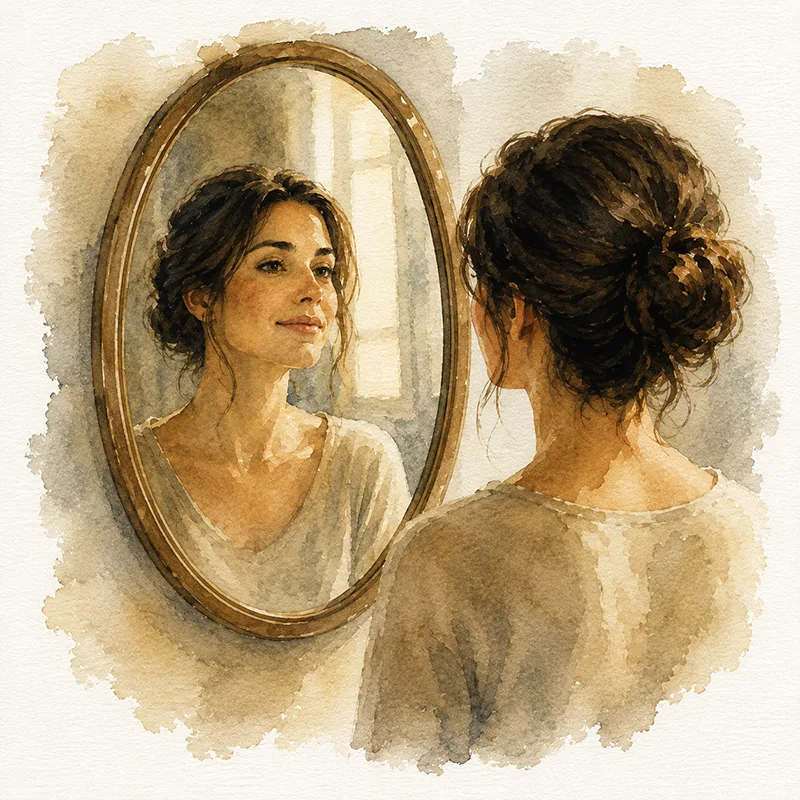
Every morning, you look in the mirror. That face looking back at you is reversed - a true mirror image, not the face the rest of the world actually sees. You've looked at that reversed version of yourself thousands and thousands of times. So many times, in fact, that your brain has quietly decided it's the correct one.
Psychologists have a term for this too: the mere-exposure effect, which is really just a fancy way of saying we tend to prefer whatever we're most familiar with, whether or not it's accurate. There's a well-known 1977 study - Mita, Dermer, and Knight, published in the Journal of Personality and Social Psychology - where researchers showed 37 women two versions of their own photo: one normal, one flipped to match their mirror image. Most of them picked the flipped, mirror version. Their close friends, who'd only ever seen the real, unreversed version, tended to prefer the normal version instead.
A studio camera doesn't reverse anything - it shows the world exactly the face everyone around you already knows, just not the one you've spent your whole life getting used to in the mirror. Even your phone knows this about you, in a way. Ever notice your selfie camera shows you a mirrored preview, the same reversed face you see in the bathroom mirror, not the true one? A lot of phones do that on purpose, because a true, unflipped selfie feels wrong to almost everyone. Some phones even save the mirrored version for exactly that reason. It's the mere-exposure effect, quietly built into your phone's camera settings.

Your voice and your face end up in the same place through two completely different paths. One's a physical quirk of how sound travels through bone. The other is just familiarity, plain and simple. But they both leave you in the exact same spot: you are, in a very real sense, the person on earth least equipped to know what you actually look and sound like to everyone else.
Everyone around you has always seen the real face and heard the real voice. You're the only one who hasn't.
I think about this a lot, honestly, because it explains something I hear constantly in my studio: "I just don't photograph well," or "that doesn't really look like me."
Most of the time, it does look like you. It's just an unfamiliar version of you - the one everyone else has known all along. That reaction isn't a flaw in the photo, and it isn't a flaw in you. It's just your brain running into the same mismatch it feels every time you hear your own voice played back.
A good portrait isn't trying to trick you into a face you've never had. It's just showing you the one everyone else already sees - the one that was real the whole time.
So the next time a photo catches you off guard, maybe don't rush to the usual question. Instead of "what's wrong with this picture," try "this is what everyone who loves me has been looking at all along." That's a nicer way to see it - and it happens to be the accurate one, too.

Written by
Larry Lourcey is a Master Photographer with more than 30 years of experience creating timeless portraits of children, families, and seniors in Plano, Texas. Through the Learn series, he shares practical advice and observations to help families preserve what matters most.
Keep Reading
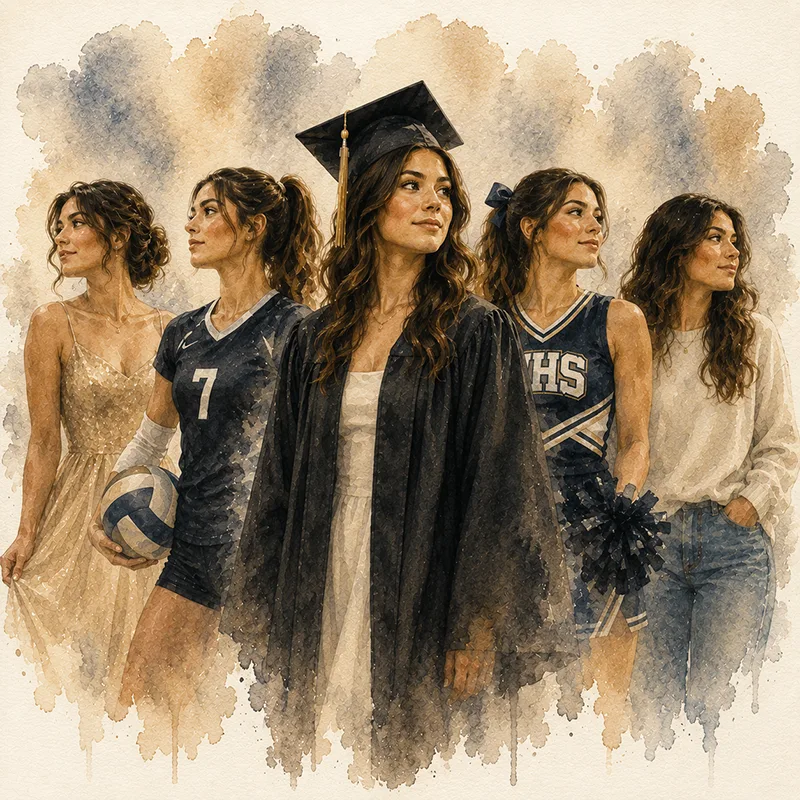
The Secret to Unique Senior Portraits
Forget the Pinterest senior picture ideas. Larry Lourcey on why the most unique thing in any senior portrait is the senior themselves.
Read more→Why You Never Look the Way You Expect in Photos
Why does your own voice or photo never look "right" to you? Larry Lourcey on the science behind why everyone else has always seen the real you.
Read more→
How Much Do Professional Headshots Cost?
How much do professional headshots really cost? A real look at DFW pricing, what affects it, and why a phone photo isn't quite the same thing.
Read more→Begin Your Portrait
A timeless portrait goes beyond how someone looks. It tells a story worth keeping.
Discover the Portrait ExperienceTimeless portraits. Lasting legacies.
© 2026 Lourcey Photography. All work made with care.
PPA Master Photographer