A photographer reflects on portraits made for no occasion at all, and why the ordinary moments of childhood may be the ones worth preserving most.
Read more→Timeless portraits. Lasting legacies.
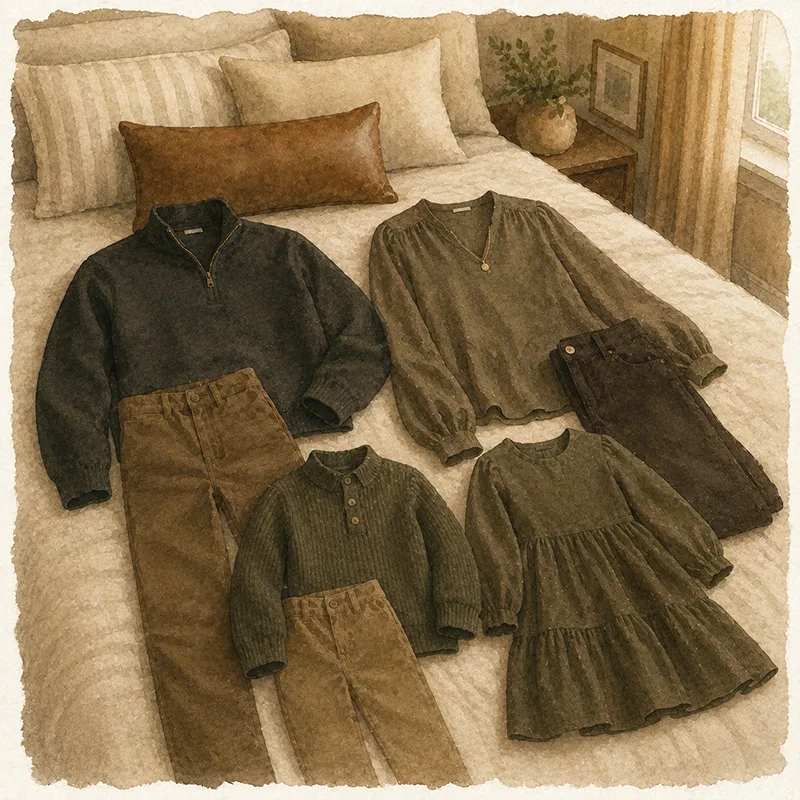
"What should we wear?"
It may be the most common question families ask when planning a family portrait session. And after more than 30 years of photographing families, I've learned that the best answer usually isn't a particular color, style, or outfit.
It starts with another question: where is the finished portrait going to live?
That may sound like an odd place to begin a conversation about clothing, but I believe a family portrait should be planned with the finished piece in mind. The clothing, location, lighting, composition, and even whether the portrait will be in color or black and white should all work toward the same goal. After all, you're going to wear those clothes for an hour. The portrait may hang in your home for decades.
Imagine we're creating a formal black-and-white family portrait for your dining room. In that situation, the actual colors of the clothing aren't particularly important. What matters more is how those colors translate into shades of gray. We might choose solid colors that are roughly the same tone - all medium-dark or all darker, for example. Once converted to black and white, they'll coordinate beautifully without everyone wearing exactly the same thing.
Now imagine that same family wants a color portrait for a den filled with warm woods and earth tones. Suddenly our wardrobe choices might move toward browns, rusts, and other colors that feel at home in that room.
That's why I'm reluctant to hand families a generic list of "best colors for family pictures." The best colors depend on the portrait we're trying to create.
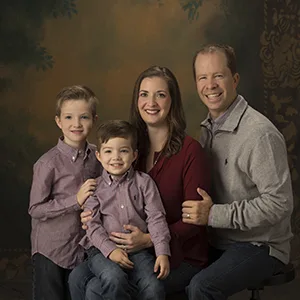
There was a time when family portrait clothing often meant everyone wearing the same thing - everyone in white shirts, everyone in denim, everyone in matching red sweaters. That's rarely necessary. I would much rather see a family in clothing that works together without actually matching.
One of the easiest ways to determine whether you've accomplished that is remarkably low-tech: throw everything on the bed. Lay out Mom's outfit, Dad's, the kids', shoes and accessories if they'll be visible. Then stand back and look at everything as one unit.
Does it look good together? Does anything immediately jump out? If one shirt or dress demands your attention while everything else works together quietly, that's usually a pretty good indication that something needs to change.
You don't need everyone in red. You might simply decide everyone will be in earth tones. Think harmony rather than uniformity.
Patterns are usually where I become a little more cautious. Bold stripes, large florals, plaids, logos, and other strong patterns can create areas of distraction. Instead of looking at someone's expression, your eye suddenly finds itself staring at a shirt. That's exactly what I don't want.
The portrait already has a star: your family. The clothing doesn't need to be a co-star.
This doesn't mean every piece of clothing has to be completely plain. There aren't many iron-clad rules in portrait clothing. But whenever we're making a decision, I ask whether that choice helps direct attention toward the people or competes with them. The people should win every time.
Personally, I tend to prefer darker clothing for portraits. One reason is simply visual - darker clothing tends to recede, allowing faces and expressions to become more prominent. It can also be more forgiving.
A plain white shirt can become something of a blank canvas, particularly against a lighter background. Small wrinkles in the clothing, fit issues, and even lines and blemishes on the face can become more noticeable. Darker clothing tends to hide many of those little distractions.
Does that mean you should never wear white? Absolutely not. If an all-white portrait is something a family really wants for a specific reason, we can certainly create it. It's simply not my first choice. To my eye, the all-white family portrait can also feel somewhat dated - which brings us to another consideration.
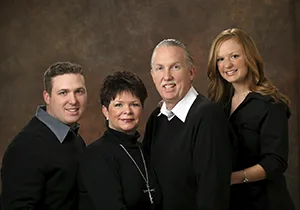
I want the portraits I create to feel timeless. That means I'm always a little cautious about clothing that's so fashionable today that it immediately identifies when the portrait was made.
Anyone who remembers the white-and-black tuxedos of the disco era knows exactly what I'm talking about. They looked pretty cool at the time. They didn't age particularly well.
The same principle applies to seasonal clothing. If we're creating a portrait in October, that doesn't automatically mean we need sweaters, boots, and traditional fall colors. Again, I go back to the destination of the portrait. The photograph may be taken in October, but it isn't going to hang on your wall for October. Hopefully, it's going to hang there for many years.
Dress for the portrait, not the calendar.
When children are part of a family portrait, their clothing should simply feel like it belongs in the same photograph. It doesn't need to match Mom and Dad exactly, but it does need to be in the same neighborhood.
If Mom and Dad are dressed formally, putting the kids in overalls probably isn't going to make much visual sense. Conversely, if we're creating a relaxed portrait of a barefoot family at home, putting a child in a suit and tie would feel equally out of place. The goal is consistency of feeling.
Whether shoes matter depends entirely on the portrait. For a full-length environmental portrait of a family in their home, shoes absolutely matter - they're part of the composition and need to work with everything else. For a closer studio portrait where everyone's feet will be outside the frame, they may not matter at all.
This is another reason I prefer planning the portrait first and making wardrobe decisions afterward.
Jewelry, scarves, watches, and other accessories are difficult to reduce to a single rule. My general philosophy is the same: accent without distracting.
But there's another consideration. Suppose Mom has a necklace that belonged to her grandmother. Suddenly that piece isn't merely an accessory - it has sentimental value and contributes something to the story of the portrait. In that case, I would absolutely consider including it.
Portraits are ultimately about people and relationships. Sometimes a meaningful object deserves to be there.
I'm less concerned about whether a shirt is slightly itchy than I am about whether you feel good when you look in the mirror. Confidence matters.
If you put something on and immediately think, I look good in this, that's valuable. Feeling confident changes how you carry yourself, and that can absolutely come through in a portrait.
The goal isn't simply finding clothing that photographs well. It's finding clothing that photographs well and still feels like you.
If you're staring into your closet wondering what your family should wear for pictures, don't make it more complicated than it needs to be.
Start by thinking about the portrait you want to create and where you want to enjoy it. Then choose your clothing and throw everything on the bed. Stand back. Does everything look good together?
If it does, you're probably there. And if one thing immediately grabs your attention, remember: if it stands out on the bed, there's a pretty good chance it's going to stand out in the portrait too.
Want to find out when the best time for a family portrait really is?
Find out here!

Written by
Larry Lourcey is a Master Photographer with more than 30 years of experience creating timeless portraits of children, families, and seniors in Plano, Texas. Through the Learn series, he shares practical advice and observations to help families preserve what matters most.
Keep Reading
The Ordinary Moments Are the Ones We Forget
A photographer reflects on portraits made for no occasion at all, and why the ordinary moments of childhood may be the ones worth preserving most.
Read more→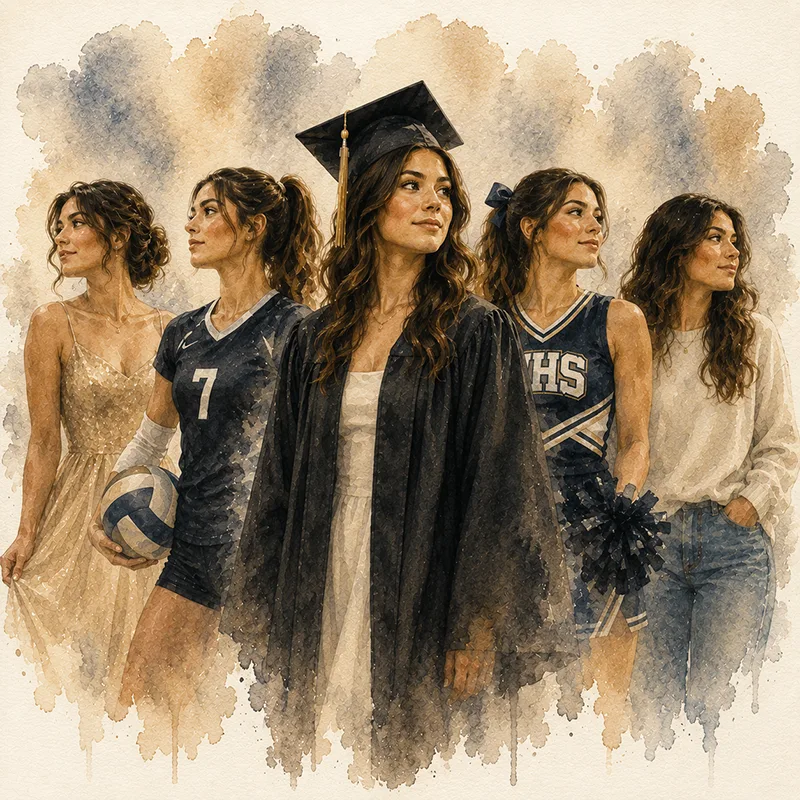
The Secret to Unique Senior Portraits
Forget the Pinterest senior picture ideas. Larry Lourcey on why the most unique thing in any senior portrait is the senior themselves.
Read more→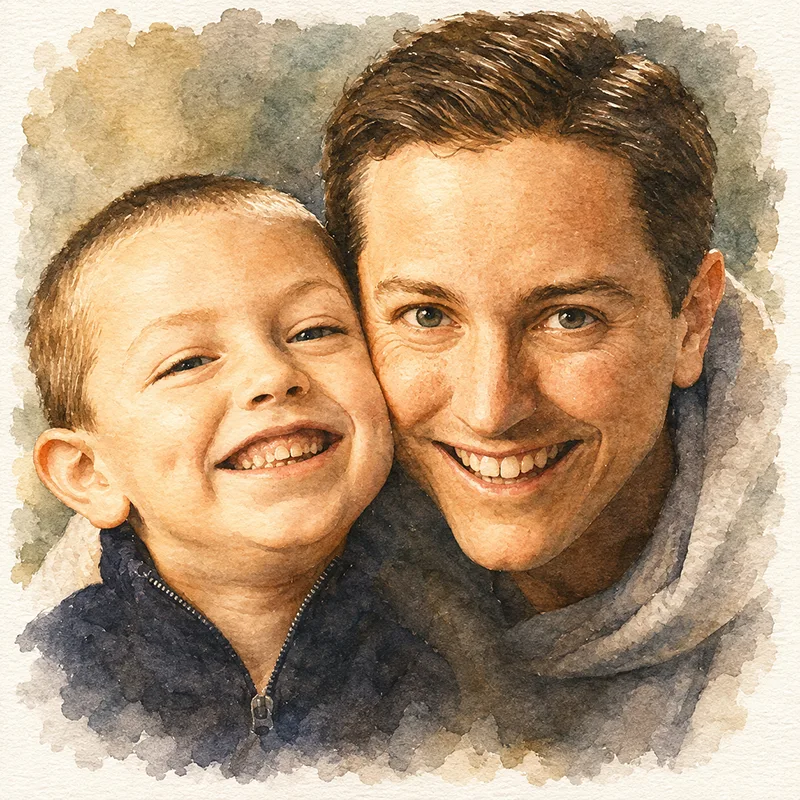
Why the Worst Timing Sometimes Makes the Best Pictures
A shaved head. A black eye and boxing gloves. Larry Lourcey on why the worst-timed photos sometimes turn out to be the best ones.
Read more→Begin Your Portrait
A timeless portrait goes beyond how someone looks. It tells a story worth keeping.
Discover the Portrait ExperienceTimeless portraits. Lasting legacies.
© 2026 Lourcey Photography. All work made with care.
PPA Master Photographer